Return to Main MOH Featured Recipient
Page


"Butch" O'Hare
HISTORY


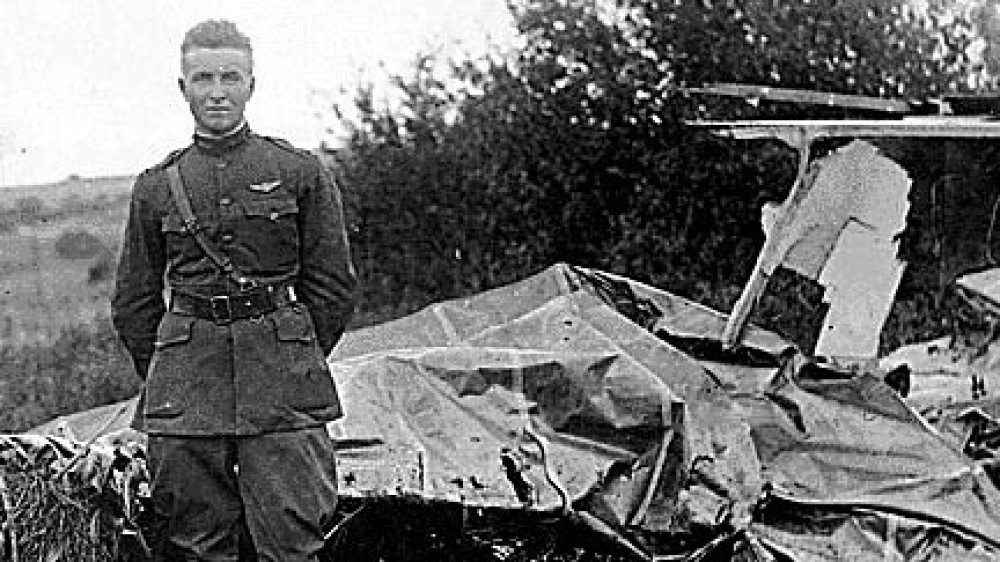
Edward Henry "Butch" O'Hare grew up in Chicago, Illinois and would later have the Airport of his hometown named after him. Butch was awarded the Medal of Honor for his actions over the Pacific Ocean. Those actions began when he had to head off nine Japanese bombers headed for his carrier the Lexington. 

Only he and his wingman were able to reach the bomber convoy in time to protect the Lexington. But as they dove for the bombers, his wingman had to bail out after his gun jammed. So it was "Butch" O'Hare versus nine Japanese bombers.  As the nine bombers' gunners concentrated their fire upon O'Hare's F4F Wildcat he intrepidly dove after them and successfully blew up the engine of the last plane in the bomber's V formation. 

As the plane spiraled towards the Pacific, O'Hare took aim at the next bomber and ripped into it and sent it on it's way to the water. Butch then dove under and across the formation and shot up the port engine of the last Japanese plane on the opposite side of the formation. Butch continued to attack the bombers until he was out of ammunition. At that point a total of five bombers had been downed by Lieutenant O'Hare. 

Squadron Commander John Thach (a Lieutenant Commander) later remarked that he saw three of the bombers falling in flames simultaneously! When O'Hare's ammo ran out Thach and the rest of O'Hare's squadron were fortunately able to catch up to the bombers. They finished off the rest  with the help of the Lexington's anti-aircraft guns and the Lexington escaped unharmed as it was able to evade the few bombs the Japanese were able to drop.

Thach was amazed that O'Hare was able to use the miniscule number of 60 rounds of ammo per downed bomber. Butch O'Hare returned home to receive the Medal of Honor and was promoted to Lieutenant Commander. He then returned to the fray although he probably could have stayed out of action for the remainder of the war. He was killed in November 1943 when he was probably shot down by friendly fire during the Great Marianas "Turkey Shoot". It was the first successful night-fighter operation from a carrier. But since it was the first night time operation of its kind events were complicated and confusing. But O'Hare will never be confused as anything but someone who fought with great courage and skill.

Thanks to "The Aviation Group" for much of the above history.


Copyright © 2003 Congressional Medal of Honor Society. All rights reserved.
Information in this document is subject to change without notice.